- Aim for about 20 minutes a day: 15 minutes of reading, 5 minutes of review.
- Pick a book you would enjoy in your own language and can mostly follow.
- Look up words without leaving the page, and choose the meaning that fits the sentence.
- Keep each new word with its sentence and review it a day, a few days and a week later.
- Missing a day is fine. Coming back the next day is what counts.
Why a routine beats a timetable
Vocabulary grows from meeting the same words many times, in real sentences, over weeks. That happens when you read a little almost every day, not when you study for three hours once a week. A short routine that survives a busy day is worth more than an ambitious plan that does not.
Classes are still useful for speaking practice and feedback. Reading on your own time is the part that builds the words those conversations need.
The 20-minute routine
Attach it to something you already do: the commute, the first coffee, the last minutes before sleep. The same moment every day turns it into a habit faster than willpower does.
Choose a book you can actually follow
If you can follow the story but meet a handful of new words on each page, the level is right. If almost every line has a new word, choose something easier, such as a graded reader or a book you already know in your own language. Enjoyment matters more than prestige: you will only keep reading a book you want to finish. If you have a classic in mind, look at its word list first: one glance shows whether its vocabulary is within reach.
Look words up without leaving the page
Switching to a dictionary app breaks the scene. Worse, it gives you ten meanings and you have to guess which one this sentence uses. Keep the lookup on the page and pick the meaning that fits the line you are reading. Phrases like “make out” or “give in” should be read as one unit.
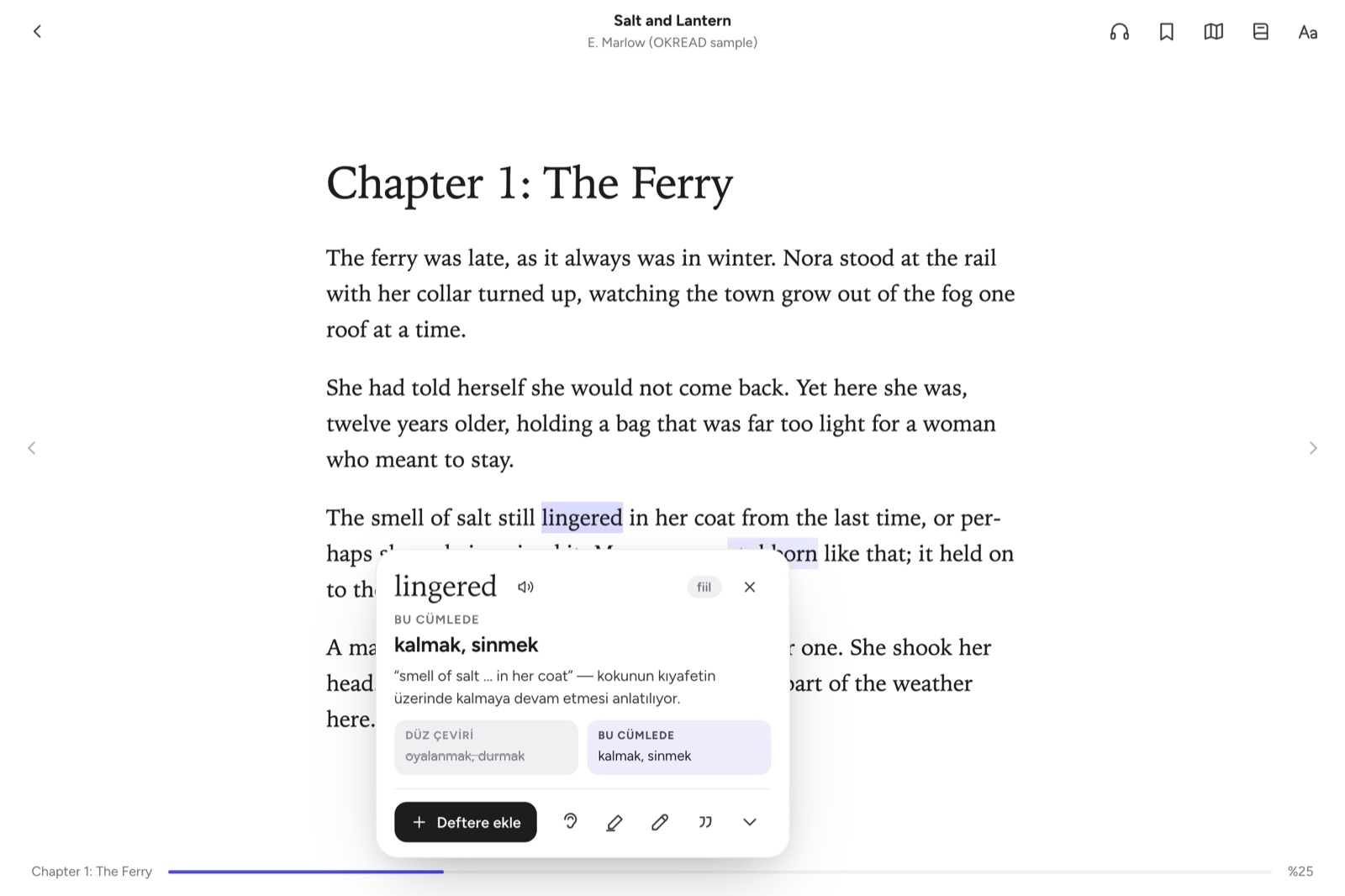
Keep the word with its sentence
A word on its own is easy to forget. The sentence you found it in, and the scene around it, is what brings the meaning back. Save only the words that repeat or that you would like to use yourself. Five good words a day is plenty.
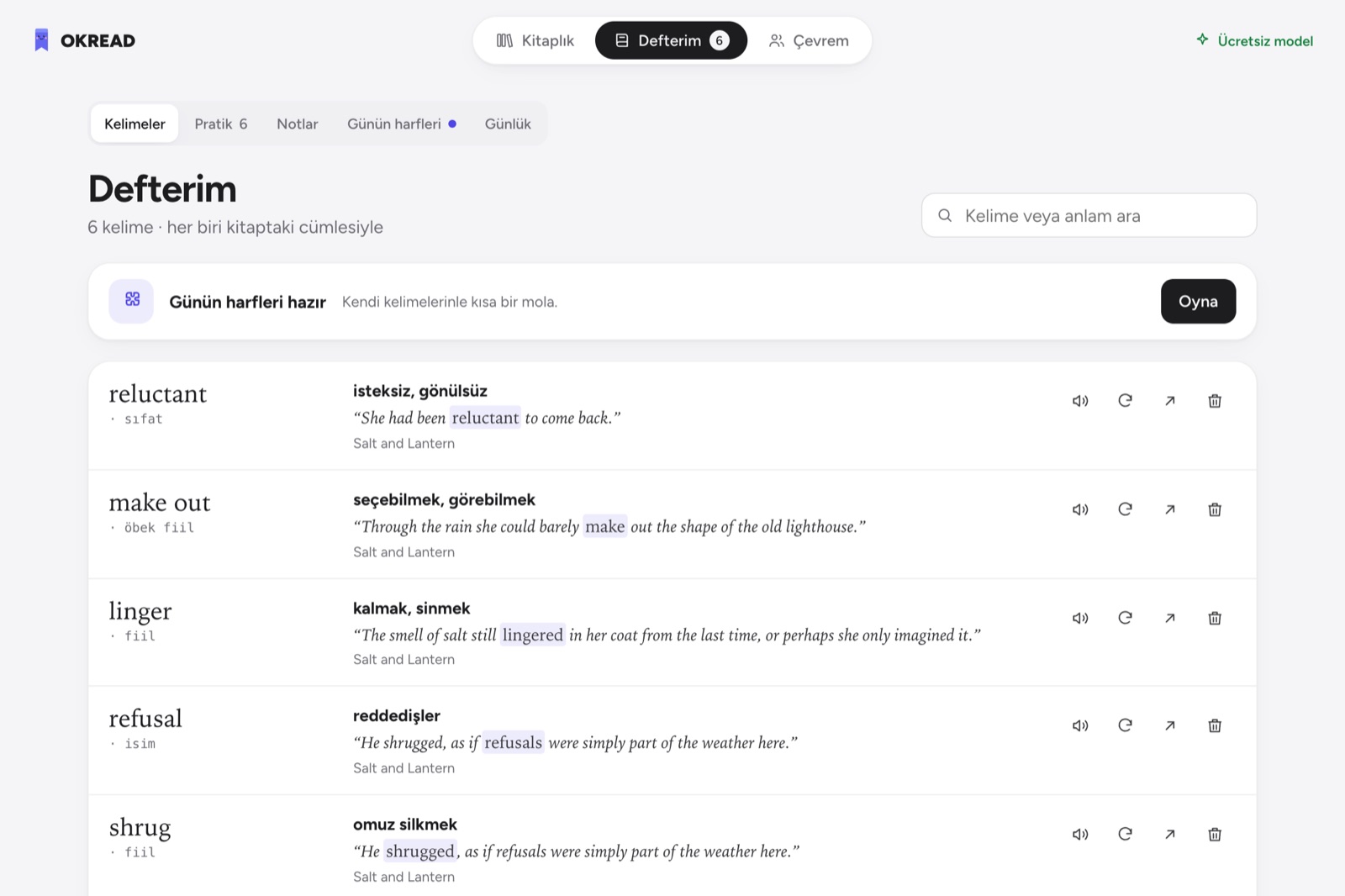
Review a little, at the right time
Look at a new word again after a day, then after a few days, then after a week. Each review takes seconds, and each one makes the next gap longer. This is called spaced repetition, and it is the most reliable way to stop forgetting.
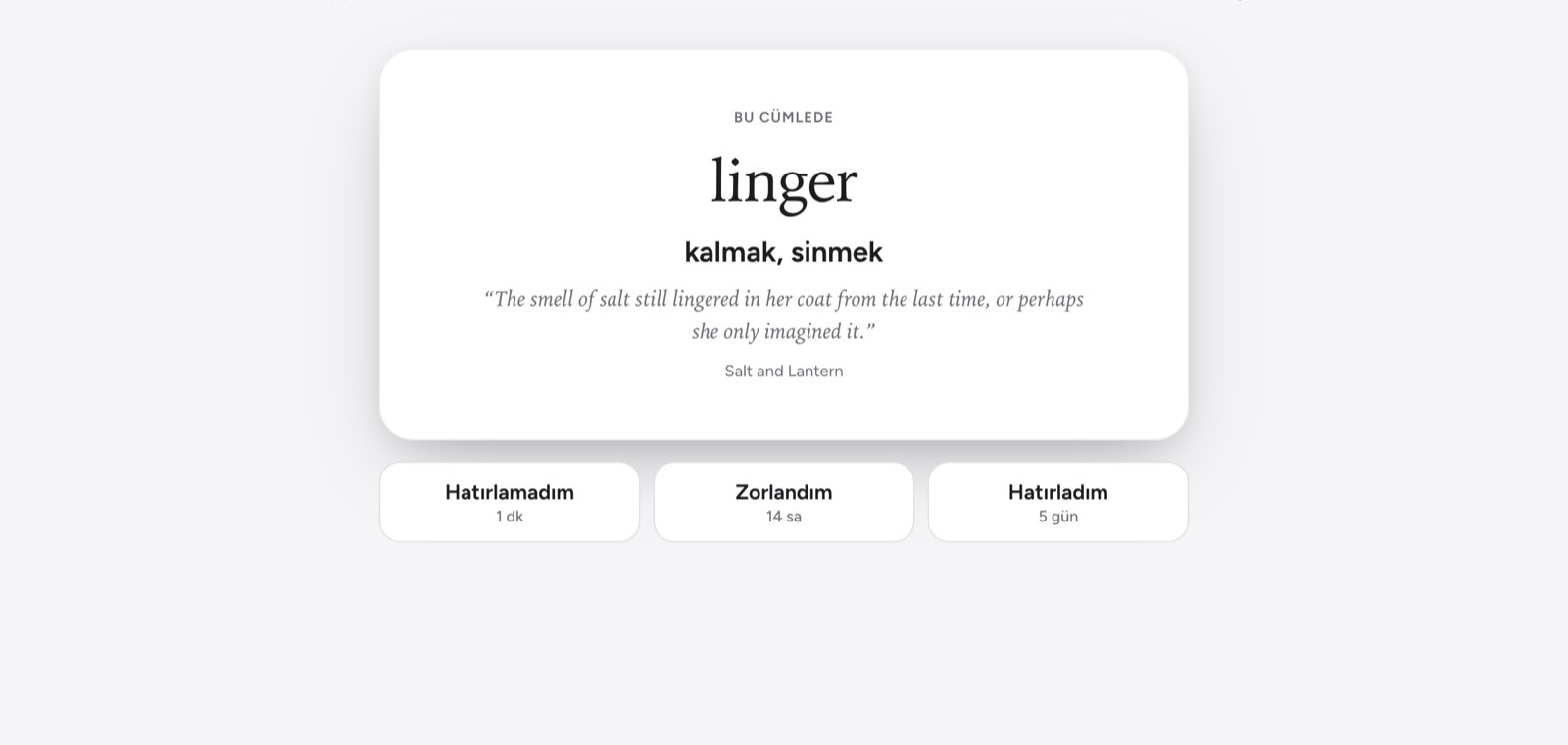
Add a little output
Reading makes words familiar. Using them makes them yours. Once or twice a week, write three sentences about what you read, or say a short summary out loud. It feels slow at first, and it is exactly what helps when you need the word in a conversation. If you understand a lot but keep saying the same few words, read why that happens and how to fix it.
Common questions
How long before I notice progress?
It depends on your level and how often you read. Many readers notice that pages feel easier after a few weeks of steady reading. The bigger change, words coming to mind when you speak, takes longer and grows with review and output.
Is reading enough on its own?
Reading builds vocabulary and a feel for grammar. For speaking and listening, add those skills too: podcasts, films, conversation. Reading is the base the other skills stand on.
What if I miss a few days?
Start again with a short session and review first. Your saved words are still waiting, and a gentle return is better than a perfect streak you cannot keep.