- Understanding a word and using it are two different kinds of knowing. Most learners have far more of the first.
- A word moves into your speech after you have produced it a few times yourself, not only met it.
- Pick a few words from what you read that you would actually say, not every new word.
- Use each one in a sentence about your own life the same day, then recall it again a few days later without looking.
- Reading still matters: it is where the next useful words come from.
You know more words than you use
Language teachers separate two kinds of vocabulary. Receptive vocabulary is the words you understand when you read or hear them. Productive vocabulary is the words you can bring up yourself when you speak or write. For almost every learner, the first is much bigger than the second.
So when you say “I keep using the same words”, nothing is broken. Your reading has done its job: you recognise thousands of words. They just have not crossed over into the small set you can reach for under pressure.
Why the same words keep coming back
When you speak, you have very little time. Your brain picks the words it has said most often, because those are the fastest to find. A word you have only ever read, however well you understand it, is slower to come back. In a conversation, slow means it loses to “good” and “very”.
The fix is not more reading alone, and it is not a list of fifty “advanced words”. It is giving a few of the words you already understand a chance to be produced, in a sentence that means something to you.
A simple path from reading to speaking
1. Choose words you would actually say
Not every new word deserves this. Old-fashioned or literary words help you follow a classic novel, but you will rarely say them. Pick words and phrases that fit your own life: put off, get used to, reluctant, run into. Two or three a day is plenty.
2. Keep the sentence you found it in
The sentence shows how the word behaves: which preposition follows it, whether it takes “to” or “-ing”, what tone it has. “She kept putting off the visit” teaches you more than “put off = to delay”.
3. Use it once in a sentence about your own life
This is the step most people skip, and it is the one that matters. Write one sentence about something real: “I have been putting off calling my bank for two weeks.” It feels small. It is the moment the word becomes yours.
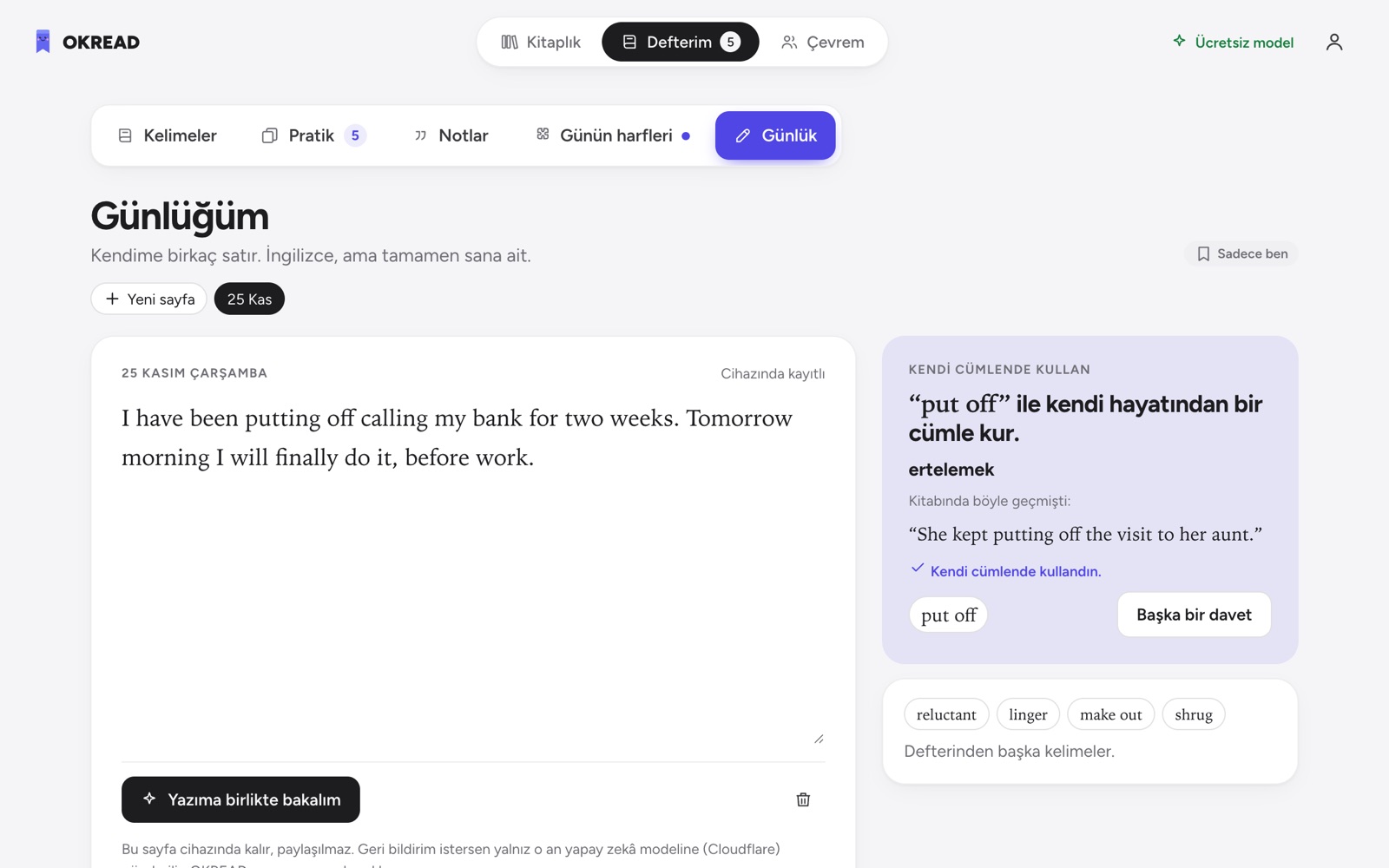
4. Recall it later, without looking
A few days later, try to bring the word back from its meaning: how would you say that you delayed something? Recalling it yourself, instead of recognising it on a card, is what makes it come to mind in a conversation.
Common questions
Will reading more books fix this on its own?
Reading gives you the words and shows how they are used, so keep doing it. On its own, though, it mostly grows the words you understand. To grow the words you use, add a little output: one sentence, a short journal entry, a summary out loud.
How many words should I practise at a time?
Fewer than you think. Two or three words a day, used once and recalled once later, will change your speech more than a long list you only read through.
I am too nervous to speak. Does writing count?
Yes. Writing a sentence is slower and calmer than speaking, which makes it a good first step. A word you have written a few times is much easier to say later.